BOHOL is advancing plans for a coffee corridor while strengthening its ubi industry through proposed community nurseries and training programs aimed at improving planting materials, food safety and market readiness. The initiatives seek to expand agricultural production and livelihood opportunities through partnerships with the Department of Agriculture (DA) and support for local growers and processors.
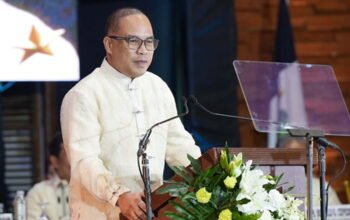
Governor Aris Aumentado met with DA Undersecretary Jerome Oliveros for Special Concerns and Official Development Assistance–Foreign Aid/Grants on October 9, 2026, following the governor’s State of the Province Address, to discuss opportunities for agricultural development.
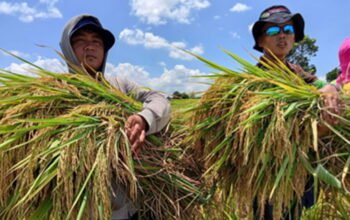
Oliveros visited Bohol to assess its agricultural roadmap, with particular interest in developing the coffee industry and strengthening ubi production.
“We wanted to develop the coffee corridor for Bohol, we are hoping na mapalakas ang ubi (production),” Oliveros said.
The proposed coffee corridor covers Mabini, Ubay and Alicia, with Amoguis Coffee Estates in Mabini, owned by Manny Amoguis, providing an existing foundation for development. The island municipality of Carlos P. Garcia has also been identified for trial planting, while the province is looking to develop approximately 300 hectares for coffee production.
After tasting Liberica coffee from Amoguis Coffee Estates, Oliveros expressed confidence in its potential for international recognition.
“I do believe that this one can be a global standard,” he said, assuring the province of his support.
Oliveros said the DA is looking into the infrastructure, farm equipment and agricultural inputs needed by Bohol. Farm-to-market roads proposed by the provincial government under the Philippine Rural Development Project (PRDP) are undergoing validation.
Aumentado identified the coffee corridor as a flagship project of the provincial government and the DA, alongside efforts to improve productivity and raise farmers’ incomes. He reiterated his goal of bringing Bohol’s poverty incidence down to single digits, citing the proposed PRDP roads as part of efforts to improve agricultural access and market connectivity.
STRENGTHENING UBI PRODUCTION
For the ubi industry, Assistant Provincial Agriculturist Larry Pamugas presented plans to establish Ubi Community Plant Nurseries that would provide organized farmer clusters with reliable sources of healthy, quality planting materials.
The proposed facilities would promote standardized propagation, organic seedbed preparation, proper nursery management and conservation of diverse ubi germplasm, while helping farmer organizations produce their own planting materials.
The province has already undertaken training to support community nursery operations. Seventeen ubi growers completed a two-day program conducted by the Office of the Provincial Agriculturist (OPA), under Provincial Agriculturist Liza Quirog, on September 29–30 at Reyna’s Haven and Garden in Tagbilaran City.
Participants received instruction in establishing, managing and operating community-based nurseries capable of producing quality ubi planting materials.
The training covered nursery management principles and design, organic seedbed preparation, ubi microsetts propagation, nursery care and maintenance, and cost-and-return analysis.
Field visits and hands-on demonstrations were held at the Bohol Island State University–Bilar Campus, the DA’s Bohol Experimental Station in Ubay, and the Bohol Organic Agriculture Technology Center, also in Ubay. Participants practiced preparing organic soil media for the mass propagation of microsetts and young ubi plants.
In an October 7 Facebook post, Aumentado welcomed the training as an important step toward sustaining ubi production in more communities.
“Dako kini nga lakang aron mas daghan ug mas lig-on ang atong mga komunidad nga makahimo og kalidad nga planting materials para sa padayong produksiyon sa Ubi sa tibuok Bohol,” he wrote.
Beyond increasing production, the governor emphasized protecting traditional varieties, particularly Ubi Kinampay, through germplasm collection, documentation and conservation. During the DA meeting, he also cited Kinampay’s distinctive aroma and the potential of the Balikunhon variety to contribute additional color and diversity, while expressing the province’s preference for non-genetically modified crops.
Quirog acknowledged the support of DA Regional Field Office 7, led by Regional Executive Director Angel Enriquez, and the technical contributors who assisted in the nursery training.
PREPARING PROCESSORS FOR WIDER MARKETS
Complementing the production initiatives, the Bohol Economic Development and Investment Promotion Office (BEDIPO) conducted Good Manufacturing Practices (GMP) training for selected ubi-processing micro, small and medium enterprises on September 30–October 1 at JJ’s Seafood House in Tagbilaran City.
The sessions focused on manufacturing practices, food safety standards and Food and Drug Administration requirements for food-processing establishments.
Professional food technologist Yoradyl Israel, a senior trade and industry development specialist of the Department of Trade and Industry, served as resource speaker. Discussions covered facility and equipment requirements, process controls, sanitation and documentation to support product quality, food safety and regulatory compliance.
A GMP Manual Workshop also guided participants in developing procedures and organizing essential business records, helping prepare processors for larger and more competitive markets.
The coffee and ubi development initiatives support the provincial government’s Strategic Governance Roadmap 2028, while the processing training advances its Strategic Change Agenda for local enterprises. Together, the efforts aim to strengthen agricultural production, preserve Bohol’s ubi heritage and expand opportunities from planting materials to finished products.