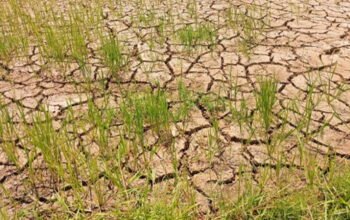
TAGBILARAN CITY, Bohol (PIA) — Gov. Erico Aristotle Aumentado has ordered the activation of the reconstituted Provincial El Niño Task Force, with nine working committees assigned to plan specific interventions for community resilience.
Under Executive Order No. 20-A, the task force is mandated to develop disaster preparedness and rehabilitation plans for El Niño and La Niña, to help the public cope with and mitigate their effects.
While the National Action Plan Framework for drought resilience covers five key sectors, Bohol opted for nine sectoral working teams, each planning short- and long-term interventions for areas expected to be severely affected by the prolonged dry season.
The executive order provides for the creation of agriculture committees, including: natural resources and water management; early warning system and information campaign; energy and power; public works; consumer protection; social services; health; and rescue and relief.
The national framework covers five sectors: water supply, agriculture, electricity, health, and public safety.
On April 2, the Philippine Atmospheric, Geophysical and Astronomical Services Administration (PAG-ASA) raised its ENSO Alert to El Niño Alert, citing a 79% probability of El Niño developing in the June-to-August period.
While ENSO-neutral conditions still prevail over the tropical Pacific, the agency said El Niño is expected to develop within months and could bring drier-than-usual conditions, with droughts or dry spells in some areas.
PAG-ASA said the relative sea-surface temperature anomaly in the eastern Pacific reached 0.5 degrees Celsius — the El Niño threshold — in May 2026, and that the event could persist until early 2027.
PAG-ASA weather forecaster Leonardo Samar said the El Niño is expected to start weak before intensifying, with the sea-surface temperature anomaly possibly reaching about 1.5 degrees Celsius above normal between October 2026 and January 2027.
At that level, the event could strengthen to a strong or very strong El Niño.
“This may have possible adverse effects on agriculture, water resources, marine resources, human health, and environment, the reason why a prompt, coordinated, and sustained action from all concerned is warranted,” Aumentado said.
El Niño follows an irregular pattern recurring every two to seven years in the tropical Pacific Ocean and affects weather worldwide, including in the Philippines.
As sea-surface temperatures in the central and eastern Pacific become warm, the trade winds weaken, changing rainfall and atmospheric circulation patterns.
Aumentado said the prolonged dry season requires short- and long-term interventions to ensure food, water, and energy security, safeguard livelihoods, and strengthen disaster and climate resilience. (RAHC/PIA7 Bohol)