BOHOL reaffirmed its commitment to grassroots sports development and youth empowerment through the upcoming staging of Boholympics 2026, discussed during the May 29, 2026, episode of The Capitol Reports held at the Ceremonial Hall of the Provincial Capitol.
The discussion focused on strengthening the province’s sports development initiatives through sustained institutional support, grassroots athlete development, sports tourism promotion, and community participation, aligned with the Capitol’s Strategic Governance Roadmap to build a healthier, empowered, and globally competitive generation of Boholanos under the leadership of Gov. Aris Aumentado.
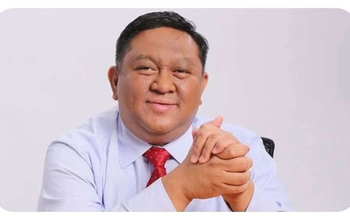
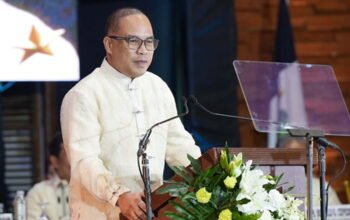
Leading the discussion were Metodio Maraguinot Jr., Head of the Provincial Youth Development Office; Joel Rosario, Tournament Chair of Boholympics; John Gelvi Bongato, Sports Section Head of the Provincial Youth Development Office; and Eugene Coquilla, Arnis Tournament Chair of Boholympics.
Maraguinot emphasized that Boholympics 2026 serves as the province’s premier sporting event and an important avenue for identifying and developing athletes who can represent Bohol in national-level competitions, with the event kicking off on June 3, 2026.
PGBh provides year-round athlete support through grassroots programs, training allowances, uniforms, transportation assistance, and continuous monitoring under the Provincial Youth Development Office (PYDO) sports development initiatives.
Maraguinot explained that the province now follows competency standards aligned with the Philippine Sports Commission (PSC) to ensure athletes receive proper training and long-term development opportunities.
He further revealed that Bohol currently institutionalizes 20 sports programs with accredited coaches and trainers, while Boholympics 2026 will feature 19 sporting events involving athletes from across the province.
Bongato highlighted that Boholympics marks a renewed effort to strengthen grassroots sports development.
He credited tournament chairs and sports stakeholders for producing gold medalists during the Batang Pinoy competitions.
Bongato also shared the acquisition of a hybrid boxing ring located at the Carlos P. Garcia Sports Complex for training and competition purposes.
Meanwhile, Rosario underscored the province’s continued support for boxing development, noting that local government units now have access to boxing equipment and improved athlete monitoring systems.
He also shared that Bohol has consistently ranked second among the country’s top-performing provinces in boxing competitions over the past two years.
On athlete selection, Maraguinot explained that the province complies with PSC standards and conducts scouting not only through local government units but also in partnership with the Department of Education.
The participation for Boholympics 2026 has reached 1,623 athletes from 28 local government units so far, with numbers expected to increase further as they continue validating submissions and completing documentary requirements ahead of the final roster.
For arnis development, Coquilla highlighted the collaborative efforts of the Bohol Arnis Federation and United Bol-anong Eskrimador Inc. to strengthen grassroots athlete development.
He proudly shared that Bohol already produced two gold medalists in Batang Pinoy and continues to implement regular training sessions, parent involvement programs, and holistic athlete development initiatives in the province, a UNESCO Global Geopark.
Coquilla also emphasized that athlete development in arnis extends beyond competition, incorporating lectures, spiritual formation, and agricultural engagement to ensure balanced growth among student-athletes.
On the other hand, Maraguinot highlighted the “One Sport, One Town” initiative, which encourages municipalities to focus on sports where they have strong athlete pools, trainers, and development potential to maximize local strengths.
Maraguinot further explained that sports tourism has become a byproduct of effective sports development, particularly through programs such as Sandugo Tigi, where municipalities are given opportunities to host sports competitions that generate local economic activity.
He further shared that Sandugo Tigi activities generated approximately ₱150 million in revenues last year, further establishing Bohol’s capability to host large-scale sporting events and competitions.
The discussion concluded with a collective message of gratitude to coaches, trainers, parents, stakeholders, and the Provincial Government for their continued support in advancing sports development across Bohol.
“It takes a village to raise a good athlete,” Maraguinot emphasized, stressing that sports development requires unified efforts from all sectors to help young athletes reach their fullest potential.
The episode reaffirmed that through strengthened grassroots programs, sustained institutional support, sports tourism initiatives, and multi-sectoral collaboration, PGBh continues to position the province as a competitive force in national sports development while empowering the youth through sports excellence and community engagement in the Bohol Island Geopark. (PR)