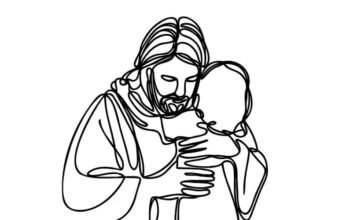
This is the worst condition that we can find ourselves in, the very opposite of what is truly ideal for us. Instead of being connected and engaged to others, especially to God first, we choose to be on our own. Instead of reaching out to others, we prefer to pursue our own interests only. Instead of being empathetic and compassionate, we just focus on our own selves. We are supposed to be men and women for others.
We have to be wary and guarded against this possible scenario that unfortunately can be seen as getting common these days. Many people are trapped in their own world. If ever they go out of their own world, it’s because they are forced to do so or because doing so would actually serve their own self-interest.
These days, there are many people whom I consider trapped in the world of the senses, ruled mainly by their instincts and emotions, and easily vulnerable to mere impulses of the flesh and the usually improperly grounded worldly values and ways. Yes, many have fallen into all sorts of addiction and mental illnesses.
This is not what to be truly human is. A human being is a person, endowed with intelligence and will among many other faculties, and as such he is meant to be related to others.
In short, we are not only rational, but also relational. We actually cannot avoid it. This is where we have to consider more deeply certain duties that we have. We cannot be passive and indifferent to our relationships. Our growth, our maturity and perfection depend on how well we take care of this essential aspect.
We have to actively purify and strengthen them, enhance and defend them. We just cannot allow them to drift in any direction, blindly obeying the forces and impulses of the flesh and the world. They have to be directed.
We have to understand that we are made to enter into relations with others. Having relations is not a marginal or optional aspect of our life. It is essential to us. Even in our conception and birth, we need parents, we need a family, then a community, and all sorts of persons, both individually or collectively considered.
It is said that during the creation of man, God first made Adam. And though he already had relation with everything else in Paradise, God later thought Adam needed someone else “like him.” And so, Eve came along.
The story tells us of the kind of relationships we have. We have relations not only with objects, plant and animals, but also with other people, and ultimately, as well as primarily and constantly, with God.
In fact, the very basis of this relational character of our life is God himself. Though one, he is three persons. That’s because as God, he is never alone, nor idle and cold. Within himself and with the rest of creation, his eternal being and activity produce the three subsistent persons who are in perpetual relation with one another, precisely because of the eternal activity of knowing and loving within him and with the world.
This Trinitarian nature and life of God is the ultimate basis, pattern and goal of the relational character of our life. Thus, in the Catechism we are told: “The communion of the Holy Trinity is the source and criterion of truth in every relationship.” (2845)
And it adds something worth noting. “It (our every relationship) is lived out in prayer, above all in the Eucharist.” We need to understand then that our relational character is developed and lived first of all in prayer and in the Eucharist. Without prayer and the Eucharist, that relational character of our life is negated. (Fr. Roy Cimagala)