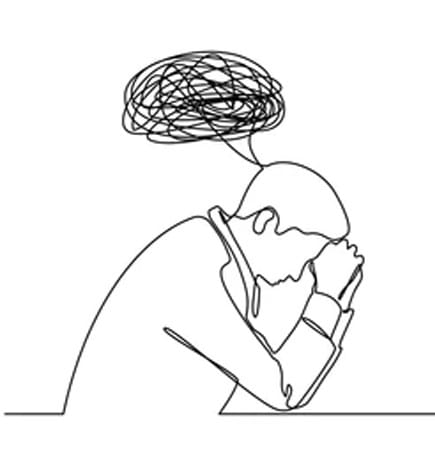
Nowadays, mental health clinics are becoming more common. More people, especially the young, seek help for anxiety, depression, stress, trauma, and other emotional struggles. This growing need should concern us all.
These clinics perform an important service. Professional counseling, therapy, medication, and other psychological interventions have helped many recover balance and hope. They deserve our appreciation and support.
But there is one truth we should never overlook. Mental health and spiritual health are deeply connected.
One affects the other. A troubled mind can make prayer difficult, weaken hope, and drain one’s desire to do good. At the same time, a neglected spiritual life can leave the mind more vulnerable to fear, loneliness, despair, and confusion. They constantly interact because the human person is both body and soul.
Yet we should also keep our priorities clear. Our spiritual life has primacy. It is the soul that gives ultimate meaning to everything else. We are not merely biological or psychological beings. We are children of God, created to know him, love him, and live with him forever.
This is a point worth remembering in a culture that often looks only at the psychological or material dimensions of life. Human problems cannot always be solved by techniques alone. There are wounds that only God’s grace can heal.
Everything begins with our relationship with God. When we strive to pray, receive the sacraments, meditate on God’s word, and do his will, we develop an inner stability that no external circumstance can completely destroy. We discover that our worth depends not on success, popularity, or comfort, but on being loved by God.
That spiritual foundation strengthens the mind. Life will still bring disappointments, failures, sickness, misunderstandings, and loss. But faith enables us to face them without losing hope. We may experience sorrow, but not despair. We may feel fear, but we are not paralyzed by it. We may carry heavy burdens, but we never carry them alone.
This is one of the practical consequences of a healthy spiritual life. It gives meaning to suffering, direction to difficulties, and peace even in uncertainty. We begin to see every event, pleasant or painful, as something God can use for our good.
The reverse is also true. When we neglect our spiritual life, we often lose our proper perspective. Small problems can become overwhelming. Setbacks easily discourage us. We become imprisoned by our emotions because we have lost sight of God’s loving providence.
This does not mean that every mental illness is caused by weak faith. Many psychological conditions have genuine biological or emotional causes and require competent professional care. Seeking such help is neither a sign of weakness nor a lack of trust in God.
Rather, grace and sound therapy should work together. God can act through doctors, psychologists, counselors, family members, and friends. But while professional care heals the mind, only God can fully satisfy the deepest longing of the heart.
That is why we should care for both our mental and spiritual health. Let us seek competent medical help when needed, but let us also nourish our soul through prayer, the sacraments, Scripture, and works of charity.
Then we can truly make St. Paul’s words our own: “Do not be anxious about anything… the peace of God, which surpasses all understanding, will guard your hearts and your minds in Christ Jesus.” With Christ at the center, we can face every challenge with serenity, courage, and lasting hope. (Fr. Roy Cimagala)