BOHOL is known for the Chocolate Hills. This year, it brought actual chocolate — from cacao trees grown in its soil — to the tables of Southeast Asian leaders.
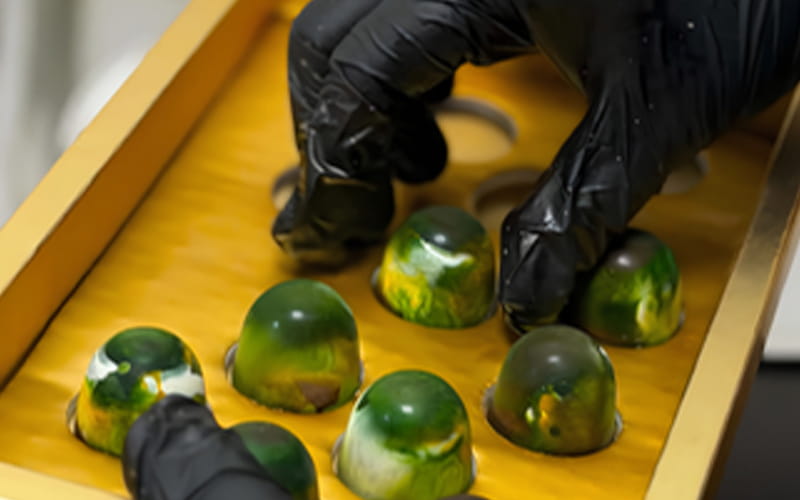
A wave of emotions and reflection came over chocolate maker Rose Amores-Hudson, whose roots trace back to Bohol, after she learned that her handcrafted chocolate bonbons were selected to be served exclusively to Association of Southeast Asian Nations (ASEAN) leaders during the Gala Night in Cebu.
First Lady Liza Araneta Marcos, who was hands-on in the preparations, personally selected Hudson’s bonbons — particularly the calamansi cheesecake flavor — for the leaders’ menu. “Every detail was thoughtfully arranged to give our ASEAN guests a warm and meaningful Filipino experience,” the first lady said.
Hudson initially believed her bonbons would be served to all delegates and guests during the Gala Night, then learned they were reserved for the leaders. “I don’t know what to feel, actually. I am very honest. Is it just luck that we got chosen, or is our product really that good?” she said.
She said the recognition was not instant. A year earlier, she brought her bonbons to Malacañang, where the first lady tasted them.
“For some reason, for this ASEAN, she remembered those flavors, and she particularly requested the calamansi cheesecake,” she said.
Beyond calamansi cheesecake, Hudson’s bonbons feature Filipino-inspired varieties such as mango float, puto maya, latik, turon, ube, and buko pandan, along with a regional blend from Luzon, Visayas, and Mindanao – she named it LuzViMin. The LuzViMin bonbons were also among the flavors the first lady tasted.
Hudson, founder of the brand Victoria Amores Chocolates, transforms Bohol cacao into confections that local growers have described as tasting “imported.” Through partner Anzani Restaurant, the caterer for the gala night, her creations reached the leaders’ table.
SWEET SURPRISE
Hudson’s connection to cacao began in her younger years, during summers in Bohol, where memories were tied to sikwate, or hot chocolate made by her father. Sikwate, widely enjoyed in the Visayas and Mindanao, is made from pure roasted cacao tablets known as tablea.
When she later married in Bohol, her husband asked why a province so well known for the Chocolate Hills had no actual chocolate farm.
A REBUILD
In her research, Hudson found that a major agribusiness firm had once sourced cacao from Bohol, but local growers were discouraged after a supply contract did not push through. She said she saw sacks of cacao being sold in public markets after the failed agreements, leaving farmers uncertain whether to continue producing.
Hudson began bringing cacao home, turning it into bonbons and sharing them with the same farmers who had lost hope.
“Nagpagana pa sila og kaon kay mura kuno og imported (They hesitated to eat it because they said it tasted imported),” she said. “But I told them, ‘No, these are actually your cacao.’”
The effort, she said, helped rebuild farmers’ confidence and encouraged them to keep producing with the assurance of a stable market. It led to the establishment of the Bohol Chocolate Farm in Sagbayan, near where some of the Chocolate Hills are located.
“Bohol Chocolate Farm was established, the number one reason or purpose actually is to have our own now Bohol Single Origin,” Hudson said, noting the initiative began with a nursery and the distribution of seedlings. In its first stage, the farm had about 15,000 to 20,000 seedlings.
She said another purpose is to serve as a guaranteed market for cacao farmers.
“Wala naman sila’y gana nga mo-atiman sa ilang cacao trees because they said nga ‘kinsa man among baligyaan (They are no longer motivated to care for their cacao trees because they ask, who will we sell to?)” she said.
She said she assured them, “Don’t worry about the market because Bohol Chocolate Farm will buy it back.”
The initiative also introduced farming technologies to improve production. Some farmers were initially hesitant and preferred traditional methods, but the program gradually gained acceptance and has partnered with at least 10 cacao growers whose harvests reached ASEAN-level exposure.
The Bohol Chocolate Farm operates as a full value-chain enterprise, from nursery to farming support, processing, and chocolate production. “We are the only farm in Bohol that carries the whole value chain, from the nursery all the way to chocolate making,” she said.
The cacao nursery is accredited by the Bureau of Plant Industry and the Department of Agriculture (DA), a distinction not commonly held even among nurseries in major cacao-producing areas such as Davao.
Hudson said quality beans are essential to premium chocolate and to farmers’ long-term success. “I’d rather have full control of the entire process of making cacao beans because we want them to succeed with farming.”
As interest grew, the farm opened to tourists, offering hands-on chocolate-making. Visitors can also buy cacao-based products such as chocolate bars, cacao tea, chocolate snacks, cacao vinegar, and cacao-based rum and beer.
“We have a variety of products,” Hudson said.
Looking ahead, Hudson hopes to expand the Chocolate Hills experience with a chocolate-farm tourism offering. “Nailhan man gyud ang Bohol sa Chocolate Hills, yes, makatilaw na gyud sila sa chocolate (Bohol is known for the Chocolate Hills, yes, and now they can also taste chocolate),” she said.
She said the local government of Carmen, where the Chocolate Hills complex is located, supports the initiative. She also shared her ambition for Bohol cacao growers to gain recognition in Cacao of Excellence, a global competition that identifies the world’s highest-quality cacao beans and the farmers behind them.
For Hudson, that begins with careful land selection, seedling distribution, and sustained farmer support. (Jositte Ann Tista/ PIA7)