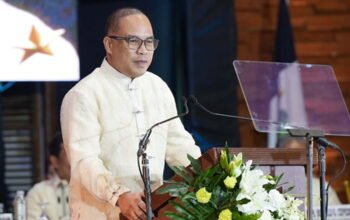
CULTURE was not merely discussed during the first-ever Bohol Heritage and Creativity Summit. It was defended, examined, and reimagined as a living force that continues to shape Boholano identity.
Held on May 26–27, 2026, at Panda Tea Garden and Suites, the two-day summit gathered festival directors, artistic heads, choreographers, cultural workers, tourism officers, researchers, heritage bearers, musicians, and local government representatives from across the province.
Organized by the Provincial Government of Bohol (PGBh) through the Bohol Center for Culture and Arts Development (BCCAD) and the Bohol Arts and Cultural Heritage (BACH) Council, in partnership with the National Commission for Culture and the Arts (NCCA), the gathering became more than a capacity-building activity. It became a province-wide reflection on memory, identity, and responsibility.
For Bohol, heritage is no longer limited to old churches, heirlooms, or annual celebrations. The province now views culture as a foundation for sustainable development and creative growth. As the country’s first UNESCO Global Geopark, Bohol continues to strengthen efforts to protect both its natural and cultural treasures.
The summit opened with discussions centered on roots, memory, and cultural frameworks. Participants explored heritage appreciation, geocultural identity, sustainability, tourism, and creative industries, supporting PGBh’s Strategic Governance Roadmap.
Geopark Program Manager Joanne Pinat discussed Bohol’s identity as an island geopark. She emphasized the importance of preserving the province’s natural and cultural landscapes together. Department of Trade and Industry Provincial Director Vierna Teresa Ligan also presented opportunities within Bohol’s growing creative industries sector.
One of the most anticipated lectures came from NCCA Chairperson and Executive Director Dr. Eric Zerrudo. He spoke about understanding cultural heritage and heritage utilization frameworks. He emphasized the importance of cultural mapping in local communities.
“This is foundational. This is the resource,” Zerrudo said, referring to the need for localities to identify and document cultural assets.
He also stressed that heritage conservation is an intergenerational responsibility.
“When you talk about sustainable development and conservation of heritage, it’s really cutting across the whole past, present, future, and being responsible that you have to make sure everybody has equal rights to all of these heritages,” he said.
The discussions continued with Fr. Milan Ted Torralba, who shared insights on Boholano heritage and cultural context. Cultural advocates John Mesana and Eric Divinagracia also delivered presentations on festivals, tourism, and creative industries.
A grounded perspective came from Loboc cultural advocates Rex Sarigumba and Engr. Jerrey David Aguilar. They shared the municipality’s festival experience and best practices. Their message strongly resonated with festival organizers.
“The festival is a platform, not the point,” they reminded participants. “The goal is not to win. The goal is for the tradition to still be alive and growing when the competition season ends.”
The second day shifted from reflection to creation. Under the theme “Creating from Living Tradition,” participants transformed heritage reflections into festival concepts and creative outputs.
Former Cultural Center of the Philippines Artistic Director Chris Millado delivered a lecture titled “Beyond Bongga.” He challenged creatives to move beyond spectacle and remain authentic to the stories portrayed in festivals.
Discussions also focused on cultural appropriation and the commercialization of traditions. Acting Deputy Director-General for Museums of the National Museum of the Philippines Arvin Manuel Villalon addressed these concerns in his lecture on the ethics of festival creation.
Villalon stressed that festivals, when done properly, strengthen pride and identity among local communities instead of reducing culture into performance alone.
The summit also revisited Bohol’s own festival legacy. Former Sandugo Festival Street Dance Committee Chair Carmen Gatal and BCCAD Consultant Dr. Lutgardo Labad discussed the history and evolution of the Sandugo Festival.
Former NCCA Deputy Executive Director Marichu Tellano concluded the discussions by presenting ways to sustain and protect local creatives and cultural events in the years ahead.
Provincial leaders echoed a common vision throughout the summit. They emphasized that culture must remain at the center of Bohol’s development agenda.
In a message delivered by Bohol Provincial Tourism Office Head Joanne Pinat, Governor Aris Aumentado described the summit as “an opportunity for us to take a stronger and more united stand in promoting and protecting our shared heritage and creativity.”
Board Member Lawrence Xavier Ancla also affirmed continued support for the cultural sector, particularly through legislation and policy initiatives.
BCCAD Head Emerson Piños said the summit aimed to deepen cultural consciousness among participants. He encouraged them to revisit the traditions, rituals, artistic practices, stories, and meaningful experiences that continue to shape Boholano identity.
For Regional Development Council 7 SC-CAD Argeo Melisimo, the summit reflected Bohol’s larger aspiration. He said the province hopes to promote, protect, and eventually benefit from the richness of Boholano culture without losing its authenticity.
By the end of the summit, one message became clear. Heritage is not simply about preserving the past. It is about carrying forward what remains valuable and meaningful. It is about ensuring that future generations can still recognize themselves in the stories, music, dances, landscapes, and traditions they inherit.
In Bohol, that heritage is now being treated not only as memory, but also as responsibility. (PR)