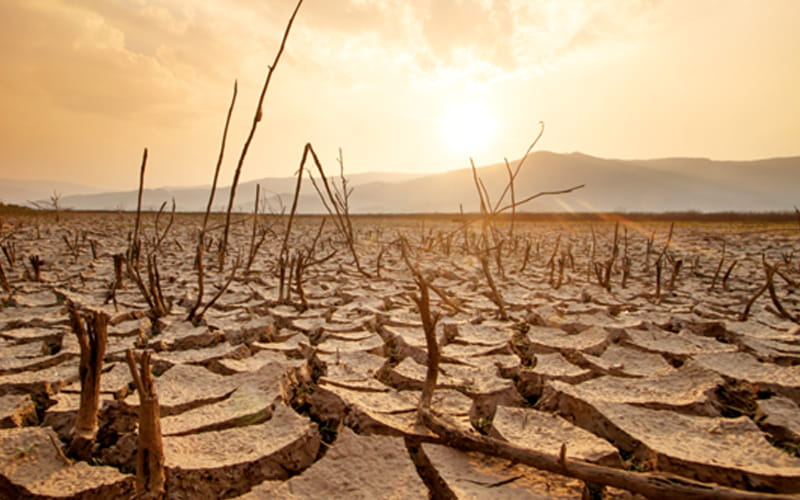
BOHOL intensified its climate adaptation and disaster preparedness initiatives through the activation of the Task Force El Niño Comprehensive Action Plan, discussed during the May 22, 2026, episode of The Capitol Reports held at the Ceremonial Hall of the Provincial Capitol.
The discussion focused on strengthening provincial preparedness measures against the projected impacts of El Niño, including food security risks, water resource management, public health concerns, agricultural productivity, and environmental sustainability, in support of the Capitol’s Strategic Governance Roadmap.
Under Executive Order No. 20, Series of 2026, the Task Force El Niño Program aimed at protecting communities, livelihoods, and local economic stability while preserving Bohol’s ecological heritage under the leadership of Gov. Aris Aumentado.
Leading the discussion were Leonardo Samar, head of the Philippine Atmospheric, Geophysical and Astronomical Services Administration (PAGASA), Bohol; Gertrudes Fuentes, Supervising Agriculturist and Crops Division Head of the Office of the Provincial Agriculturist (OPA); and Dr. Anthony Damalerio, head of the Provincial Disaster Risk Reduction and Management Office (PDRRMO).
Samar emphasized that PAGASA continues to closely monitor the possible development of El Niño conditions, noting that there is now a 79 percent probability of occurrence from June to August, which may persist until early next year.
He explained that the province may experience drier-than-usual conditions, delayed onset of the rainy season, and prolonged dry spells that could negatively affect agriculture, marine resources, water supply, public health, and the environment.
Samar stressed the importance of timely and accurate dissemination of weather information to ensure communities are properly guided and prepared for the impacts of climate variability.
Fuentes shared that immediately after PAGASA’s advisory, the OPA started formulating mitigation and intervention measures to help farmers and fisherfolk cope with the looming El Niño phenomenon and rising agricultural production costs.
She highlighted several proposed interventions, including organic fertilizer assistance, irrigation system support, cloud seeding operations, seed storage facilities, farm reservoir construction, stem plasm facilities for local seed preservation, crop diversification programs, and mass propagation of indigenous root crops such as cassava and sweet potato.
Fuentes also noted that the OPA continues to maintain available planting materials for drought-resistant crops accessible to farmers across the province.
She further encouraged households to practice backyard gardening by planting vegetables, indigenous root crops, and drought-resistant commodities, even through container gardening methods, to help strengthen household food security.
Damalerio emphasized that the provincial government convened the Task Force El Niño early this year to strengthen preparations and level up interventions in anticipation of severe dry conditions and other global factors that may affect response operations.
He reported that ₱5 million has been allocated for cloud seeding operations, while emergency response teams and technical working groups continue refining contingency plans for extreme heat conditions and future La Niña preparations.
Damalerio also assured that the province’s eight major irrigation dam systems remain stable and are not yet at critical levels, although continuous monitoring is being conducted to assess possible impacts on rice production, tourism, and local economic activities.
The PDRRMO continues province-wide dissemination of weather updates and heat index advisories to ensure the public remains informed and prepared even before the onset of El Niño.
He also called on the public to immediately practice water conservation as part of the province’s collective response against the possible impacts of El Niño.
“We encourage everyone to please join the call to conserve water because this phenomenon will affect not just individual persons, but all of us,” Damalerio said.
He emphasized that a united and immediate effort from all sectors is necessary to ensure a sufficient water supply once the dry season intensifies.
“We need a united, concerted effort from all sectors, and the call is to conserve water, not tomorrow, not in the next days, not in the next weeks, and not in the next month. The call is to start now, conserve water, so that we will have more supply when this El Niño hits the Province of Bohol,” he added.
The episode concluded with a unified message that through proactive governance, strengthened agricultural interventions, disaster preparedness, and multi-sectoral cooperation, the provincial government continues to advance climate resilience and environmental sustainability in Bohol, as a UNESCO Global Geopark. (PR)