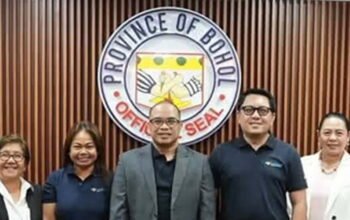
TAGBILARAN CITY, Bohol (PIA) — The Office of the Provincial Agriculturist (OPA) urged Bohol families to plant drought-resistant crops to strengthen food security as El Niño threatens the province.
PAGASA said the resulting dry spell could extend into the first quarter of 2027.
Assistant Provincial Agriculturist Larry Pamugas said organic agriculture using drought-resistant crops is the better option for families facing rising costs and limited supplies of agricultural inputs and seeds during a long dry spell.
He encouraged households to grow their needs in pots or any available space, raise their own seedlings, use organic fertilizer from composted kitchen waste and reuse water from washing vegetables to conserve supply.
Pamugas said farmers should plant rice substitutes in areas unsuited to rice, and that nutrition can come from many sources.
He cited wild yams—locally called boot, coot and palaw—and baliakag, a wild cross between gabi and palaw that is a staple among the Ati.
The advisory aligns with permaculture, an approach two practitioners promoted at the same Kapihan sa PIA forum as a response to El Niño and to declining interest in farming.
Reginaldo Balatayo and Bonifacio Javier described permaculture as a way of designing farms, gardens and communities so they function like natural ecosystems.
Balatayo, a civil engineer by training, called it a sustainable design approach that mimics nature to produce food, conserve resources and create self-sustaining systems.
Javier, a member of the Movement for Liveable Cebu, said permaculture makes farmers and crops more resilient without altering the environment.
He said practitioners plan around the core ethics of earth stewardship: caring for the land, caring for people and sharing its harvest.
They said permaculture organizes a farm around water, particularly rainwater and its management for farm use.
Other practices include planting different crops together so they support one another; raising fruit trees, vegetables, and livestock in the same area; composting kitchen and farm waste into fertilizer; and choosing drought-tolerant crops to reduce water use and improve survival.
Balatayo, who lives in the rocky coastal village of Punta Cruz in Maribojoc, said rice is impractical to grow on his land and advised farmers to match crops to their conditions.
“Og asa ka nahimutang, ayaw paghimo og kanang dili nimo mahimo,” he said. (Wherever you are, don’t attempt what your land cannot support.)
He said his family grows what it eats and eats what it grows, relying on protein-rich rice-extender crops such as camote (sweet potato), ubi (purple yam), gabi (taro), banana, apale and breadfruit.
“Taga Maribojoc man ko, walay basak, walay tubig, so nananum kog saging, ubi, kamote, apale, that kon manginahanglan ta og rice, gamay na lang,” he said. (I’m from Maribojoc, which has no rice paddies and no water, so I plant bananas, ubi, camote and apale, so that when we need rice, it’s only a little.)
“Let us practice a culture that is permanent, because our culture now is for the temporary,” Balatayo said. (Rey Anthony Chiu /PIA Bohol)