THE Provincial Government of Bohol (PGBh) highlighted the vital economic role of community cooperatives as the province opened Cooperative Month this October.
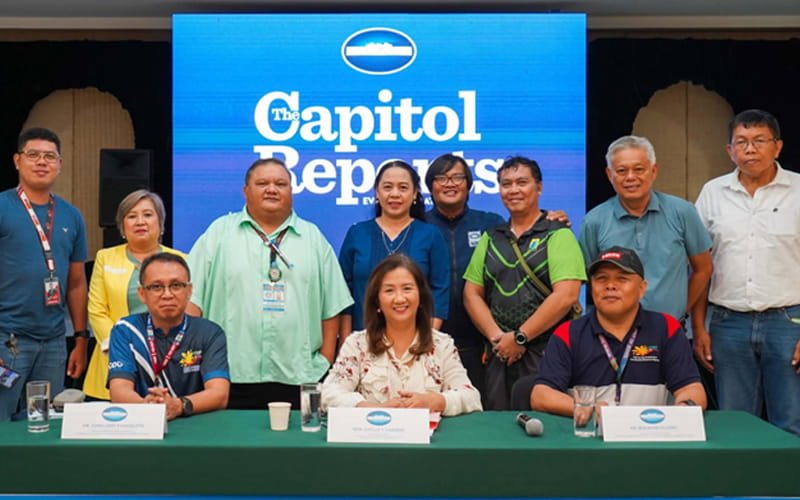
Provincial officials and cooperative leaders outlined sector achievements, capacity-building programs, and grassroots opportunities during the October 2, 2026, episode of The Capitol Reports at the Ceremonial Hall.
Panelists included Board Member Lucille Lagunay, chairperson of the Committee on Cooperatives, NGOs, POs, and CSOs; Provincial Cooperative Development Office (PCDO) Community Development Officer Benjamin Villeno; and PCDO Cooperative Development Specialist II John Larry Evangelista, who also serves as president of the League of Cooperative Development Officers of the Philippines (LCDOP) Bohol Chapter and Region VII.
The localized celebration is spearheaded by the PCDO pursuant to Republic Act No. 11502, which declares October as National Cooperative Month.
SECTOR GROWTH
BM Lagunay reported that Bohol houses 226 compliant cooperatives with a combined business volume of ₱3.888 billion and paid-up capital exceeding ₱2 billion.
Over 180,000 Boholanos actively participate as members of various cooperatives operating across the province.
Bohol’s cooperatives are classified into 112 micro-enterprises with assets of ₱3 million and below, 62 small cooperatives with up to ₱15 million, 38 medium cooperatives with up to ₱100 million, and 13 large cooperatives exceeding ₱100 million.
This year’s celebration carries the national theme, “Matibay na Kooperatiba: Nagkakaisang Pamayanan para sa Kapayapaan at Kaunlaran.”
INSTITUTIONAL SUPPORT
Villeno noted that the PCDO was formally established through Provincial Ordinance No. 2021-032 to advance cooperative growth and regulatory assistance.
He explained that emerging groups must complete a pre-registration seminar, gather at least 15 founding members, and secure registration with the Cooperative Development Authority (CDA).
Evangelista emphasized that cooperatives operate as formal business enterprises owned by member-patrons, requiring accountable officers to secure surety bonds to ensure fiscal integrity.
He added that cooperatives provide ordinary Boholanos with structured platforms to pool capital, generate livelihoods, and drive inclusive local commerce.
On governance, Villeno affirmed that the PCDO respects organizational autonomy and focuses on technical guidance, monitoring, and capability training rather than leadership interference.
COMMUNITY PROGRAMS
BM Lagunay urged informal groups to pursue official accreditation to qualify for government development programs, technical grants, and enterprise funding.
She highlighted the Coconut Farmers Industry Development Program (CFIDP), which extends planting materials, crop insurance, scholarships, medical assistance, and livelihood funding to coconut farmers registered in the National Coconut Farmers Registry System.
Lagunay also shared that municipal Community Empowerment Development Officers (CEDOs) partner with the Sangguniang Panlalawigan to assess operational challenges and deliver targeted assistance to local associations.
Month-long activities include opening events from October 1 to 3, a provincial cooperative product fair at the Capitol Lobby from October 5 to 9, and the culmination assembly on October 22 at the Bohol Cultural Center.
Under the leadership of Gov. Aris Aumentado, the PGBh continues to empower cooperatives as strategic partners in building self-reliant and resilient rural communities.
These initiatives advance the PGBh’s Strategic Governance Roadmap by promoting economic equity, job generation, and sustainable enterprise development across Bohol, a UNESCO Global Geopark. (PIMO/MFM)