
BOHOL pushes for better solid waste management as the PESWMB reviews local programs and addresses gaps in collection, disposal, enforcement, and facility operations province-wide.
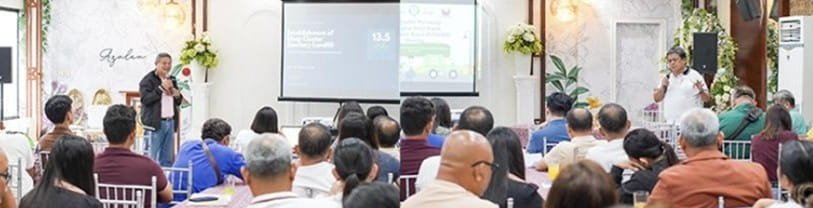
The Provincial Ecological Solid Waste Management Board (PESWMB) convened its third-quarter meeting on September 24, 2026, at the Reyna’s the Haven and Gardens.
The meeting was organized by the Provincial Government of Bohol (PGBh), through the Bohol Provincial Environment Management Office (BPEMO).
Presided over by Executive Assistant Nunila Pinat, representing Gov. Aris Aumentado, chairperson of the PESWMB.
BPEMO Waste Management and Pollution Control Division Head Leonilo Lafuente reported on the ongoing random monitoring of local government units’ (LGUs) solid waste management programs.
He emphasized the need for well-organized materials recovery facilities (MRFs), proper sanitation, regular garbage collection, and adequate manpower and budget.
Monitoring showed that enforcement and garbage collection remain among the concerns affecting local implementation, particularly in areas without regular collection services.
While foul odors were less evident during the dry season, plastic waste was still observed in some monitored areas, pointing to the need for proper sanitation, waste segregation, and facility management.
Pinat, representing the Governor, reiterated the Capitol’s support for the full implementation and the continued improvement of waste management facilities across the province.
The Board also discussed the collection and disposal of domestic waste from healthcare facilities, particularly the differing practices among LGUs in handling waste generated by health units.
Lafuente clarified that healthcare facilities generate both domestic or general waste and hazardous healthcare waste.
While some LGUs collect properly segregated domestic waste from healthcare facilities, others decline collection by classifying all healthcare waste as hazardous.
The discussion sought to establish clearer and more consistent responsibilities for LGUs, ensuring that domestic waste is properly segregated and collected while hazardous healthcare waste is handled through appropriate procedures.
Among the proposed next steps were the drafting and distribution of a uniform LGU operational circular on healthcare domestic waste collection, a baseline inventory of waste management arrangements in health facilities across barangays and municipalities, and a follow-up monitoring session.
On the reported open burning of solid waste, DENR-CENRO Talibon Enforcement and Monitoring Chief Forester Jesus Abella III called for closer Local Government Unit (LGU) involvement in addressing grassfire incidents and household waste burning.
Abella emphasized the need for local governments to participate in interventions and expressed hope for a provincial ordinance that would provide a framework for coordinated action among LGUs.
Meanwhile, Engr. Leila Cafe, MPDC and ESWM Focal Person of LGU Alburquerque, presented an update on the Alburquerque Cluster Sanitary Landfill (ACSLF), which currently handles around 25 tons of waste per day.
Cafe also discussed the status of rehabilitation works and relevant updates on the landfill.
For the proposed Ubay Cluster Sanitary Landfill, Ubay MENRO Mario Limocon reported on the planned facility, which is designed to accommodate 13.5 tons of waste per day.
Limocon noted that the proposed facility is expected to support local development by helping maintain cleanliness, sanitation, environmental quality, and the overall attractiveness of tourism destinations.
Head of the Provincial Environment Management Office of DENR-EMB Bohol, Engr. Cory Lyn Estavillo also discussed the requirements for the operation of waste-to-energy equipment.
LGU focal persons likewise shared key learnings and action plans from the SWM Summit, providing an opportunity to discuss how these can be applied to local solid waste management programs.
The meeting also included a discussion on the International Coastal Cleanup (ICC), with Lance Oliver Licnachan and Raye Cartojano of UP Diliman presenting updates on the activity.
The presentation recorded 5,242 submissions, of which 4,790 were approved and 452 rejected, with 512 unique user IDs.
Data from the plastic mass projection audit showed Cogtong in Candijay with the highest volume of plastic collected.
Commonly recorded waste items included juice bottles, bottle caps, buckets, and other plastic materials.
The discussions underscored the need for consistent implementation, coordinated enforcement, reliable waste collection, and continued investment in facilities to address solid waste management concerns across Bohol Island UNESCO Global Geopark.
The initiative supports the Capitol’s Strategic Governance Roadmap under the leadership of Gov. Aumentado by promoting coordinated action among LGUs and stakeholders in solid waste management and environmental protection. (PIMO/MFM)
