THE Provincial Government of Bohol (PGBh) is strengthening its preparedness as the province faces possible drier conditions, continued agricultural threats, health concerns, and other hazards that could affect communities in the coming months.
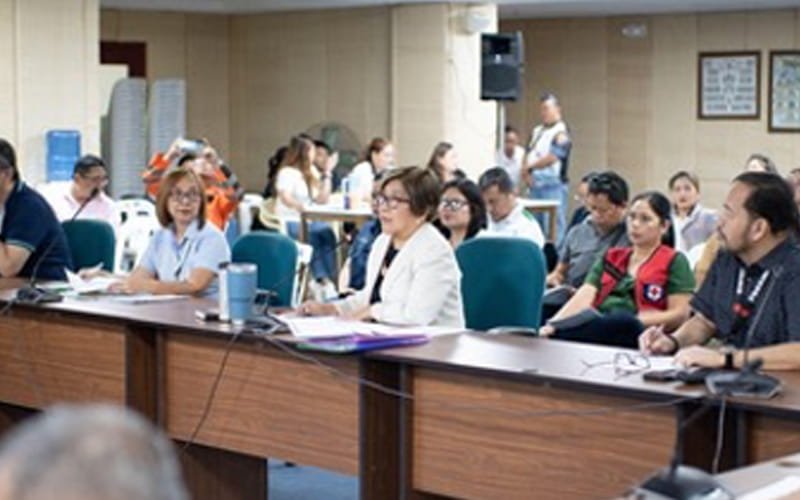
These concerns were discussed during the full council meeting of the Provincial Disaster Risk Reduction and Management Council (PDRRMC) on September 17, 2026, at the Sangguniang Panlalawigan Session Hall.
Provincial Administrator Asteria Caberte presided over the meeting with Provincial Disaster Risk Reduction and Management Office (PDRRMO) Head Dr. Anthony Damalerio.
Representatives from national government agencies, provincial offices, and the private sector joined the discussions on the province’s preparedness and response measures.
Weather conditions and the potential effects of El Niño figured prominently in the meeting.
The Philippine Atmospheric, Geophysical and Astronomical Services Administration (PAGASA)-Bohol Head Leonardo Samar said the rains currently affecting Bohol remain part of the southwest monsoon, or habagat season.
He reported that drier conditions may begin toward the end of November, with still a high probability of El Niño during the first half of 2027.
The outlook has prompted the province to look closely at sectors that could be affected by prolonged dry conditions.
The Office of the Provincial Agriculturist Larry Pamugas reported on the effects of El Niño on agriculture and fisheries, as well as ongoing preparations for cloud seeding at the provincial and regional levels.
Water availability remains a key consideration for farmers.
The National Irrigation Administration reported that the province’s dams currently have enough water to support rice irrigation for this planting season.
The province is also keeping a close watch on food supply and agricultural biosecurity.
The Office of the Provincial Veterinarian Head, Meydallyn Paman, reported that Bohol remains free from African Swine Fever (ASF).
Corella has been reclassified from a red zone to a pink zone, while six other municipalities are undergoing the reclassification process.
Hog repopulation efforts are also continuing.
In a joint effort with the Philippine Coast Guard and the Philippine National Police, authorities have intercepted three instances of illegal pig transport.
Meanwhile, Caberte directed the Department of Trade and Industry to strengthen price monitoring as part of measures to help ensure stable access to basic commodities.
The Department of Social Welfare and Development also reported on its ongoing response and the prepositioning of family food packs, allowing assistance to be mobilized when emergencies arise.
Beyond climate and food security, the council also reviewed the province’s readiness for other hazards.
The Bureau of Fire Protection reported on fire incidents and response operations, while the Philippine Institute of Volcanology and Seismology provided updates on upgrades to seismic monitoring systems.
The improvements are expected to enhance earthquake detection capabilities in Bohol.
Health preparedness also remained a major concern.
The Provincial Health Office (PHO) presented updates on dengue cases and the continuing response to the disease.
PHO Head Dr. Fruserma Mary Uy also raised the capacity situation at the Governor Celestino Gallares Memorial Hospital.
The provincial government is studying possible measures to address the hospital’s current overcapacity while maintaining access to essential health services.
The wide-ranging discussions reflected the interconnected nature of disaster risks facing Bohol.
Weather conditions can affect agriculture and water resources, while disruptions in food supply, disease outbreaks, fires, and earthquakes require equally coordinated responses.
For the provincial government led by Gov. Aris Aumentado, preparedness goes beyond responding when disasters occur.
It also means anticipating risks, strengthening systems, and ensuring that communities have the support needed before emergencies arise.
The continuing work supports Bohol’s Strategic Governance Roadmap 2028, which seeks to build resilient and self-reliant communities while advancing sustainable development across the Bohol Island UNESCO Global Geopark.
As Bohol moves into the coming months, the council’s coordinated approach puts preparedness at the center of protecting lives, livelihoods, and the province’s long-term development. (PIMO/MAPI)