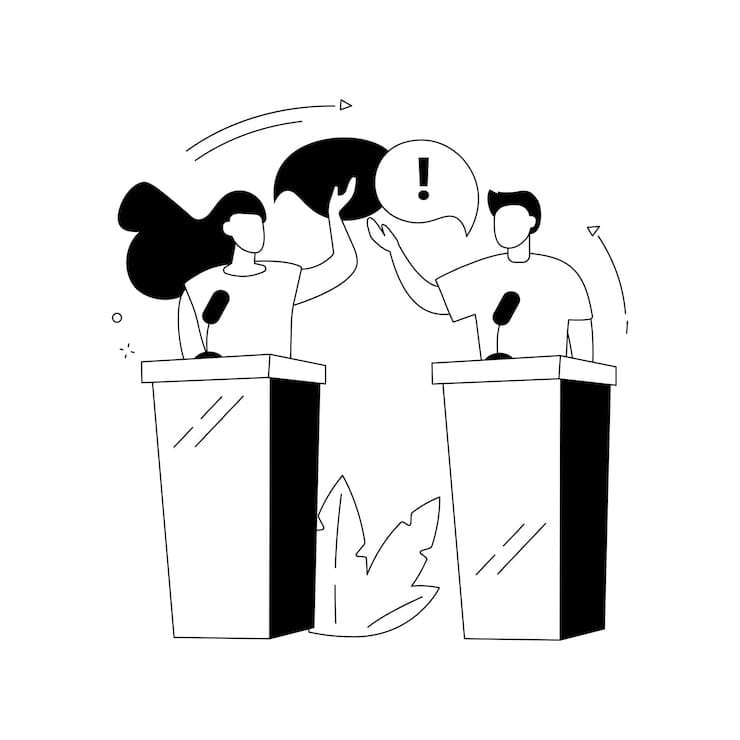
With all this very toxic air brought about by our differences and conflicts in matters of opinion and preferences, especially in the area of politics, we should be very concerned about how to cultivate a culture of dialogue and consensus-building.
In this regard, we should be willing to engage in dialogue with all the parties involved in a particular issue, considering those who think differently from us as capable of telling us things that can contribute to a better understanding of that issue.
We should be attentive to them even if we don’t like them, allowing them to make their point before we make our own. And since at times, we can meet someone who is uncontrolled and irritating in expressing his views, we should exert effort to remain calm and avoid adding toxicity around by being uncontrolled and irritating ourselves.
Hopefully, when we manage to enter into a respectful dialogue with the different parties, we can proceed to build some kind of consensus among the different positions expressed. In this regard, it would be good to find common ground and to be open to some legitimate compromise that can focus on shared goals.
In all this, we need the proper spirit that would enable us to do these things. And that spirit is none other than the spirit of Christ who actually is the foundation and model for building culture of dialogue and consensus by uniting us in him, “the way, the truth and the life.” With him we can manage to break down walls of division. We can practice mutual listening, respect for diversity while sharing the pursuit of the common good.
With him, we can manage to practice temperance, restraint and moderation in pushing our own ideas if only to allow other views and opinions to be expressed and considered also.
Yes, to be truly prudent in this regard, we should know how to practice both restraint and decisiveness in our judgments, reactions and actuations. We should not simply be restrained and moderate if only to play safe. Neither should we be bold and decisive to make our point clear.
Depending on the circumstances of a given situation, we would know how to be truly prudent, knowing when to be cautious, when to hold back, and when to take bold action. If facts are clear and the pieces of evidence are strong, then we should not hesitate to make our views clear and to take the appropriate action.
Otherwise, we should prefer to keep quiet and discreet, or would just keep some tentative views and opinions until things become clear in a way that would warrant a clear-cut judgment and action.
This kind of prudence can only come about as a result of one’s identification with Christ who would inspire us to always judge, react and act with charity. Yes, if prudence has to be true prudence, it always has to be animated by charity, the one that was shown and commanded by Christ to us.
If we take a close look at the life of Christ, we would see that he was both restrained and decisive in his ways. When some people, who were impressed with his words and miracles, wanted to make him king, he managed to get away. He also tried his best to adapt his very mysterious teachings to the capability of the people by using parables and common-life examples.
And while he could read the minds of people, he saw to it that any clarification and corrections he made was done both with clarity and delicacy. There was a forcefulness to them, but of the kind that was animated by charity.
Let’s be truly Christian to develop a culture of dialogue and consensus-building especially in our political affairs. (Fr. Roy Cimagala)