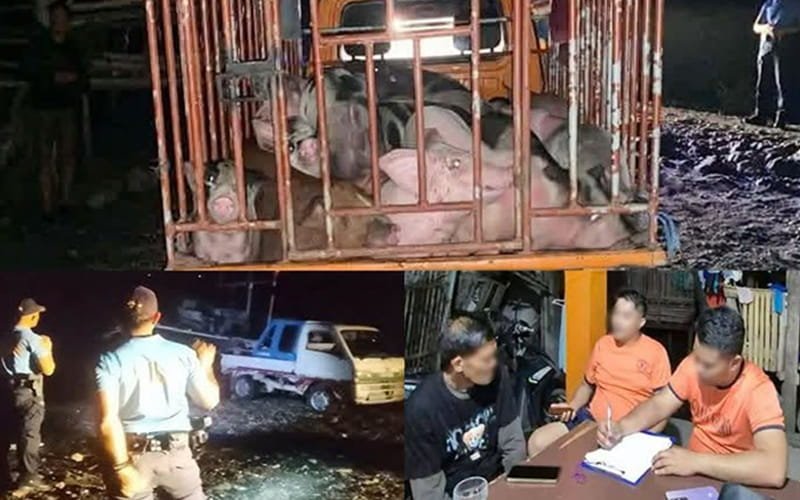
IN A vital operation safeguarding Bohol’s swine industry, local authorities intercepted an illegal shipment of 61 undocumented pigs in Sitio Ondol, Barangay San Jose, Getafe, around 10:00 PM on September 6, 2026.
The joint enforcement task force, comprising the Getafe Municipal Agriculture Office, Philippine Coast Guard Sub-Station Getafe, and the Getafe Municipal Police Station, supported by technical expertise from the Office of the Provincial Veterinarian, acted on a tip submitted by a vigilant community member.
Upon inspection, officials discovered 58 live mixed-breed pigs (weighing approximately 30–40 kg each) and three animals already dead.
The transporters failed to present mandatory government-issued shipping permits, veterinary health certificates, disease-testing clearances, or provincial acceptance documents required under Provincial Ordinance No. 2025-034.
To mitigate biological risks, the animals were temporarily impounded.
Following established health regulations, the remaining 58 pigs were humanely depopulated on September 8, under direct veterinary supervision, and transported to an authorized facility for proper sanitary disposal.
Formal notices of violation and confiscation mandates were issued to initiate administrative proceedings against the violators.
This decisive action highlights the Provincial Government of Bohol’s (PGBh) strict stance on animal health, quarantine protocols, and agricultural defense.
Preventing the entry of undocumented livestock is critical to protecting local farmers’ livelihoods and preventing outbreaks of African Swine Fever (ASF) across the Bohol Island UNESCO Global Geopark territory.
The interception enforces the standing directive of Gov. Aris Aumentado to secure provincial borders in accordance with the Strategic Governance Roadmap for resilient agriculture across the Bohol Island Geopark.
It also strengthens Executive Order No. 28, Series of 2026, implementing veterinary quarantine, border surveillance, and biosecurity measures to prevent ASF and protect Bohol’s livestock industry, food security, and the livelihood of local hog raisers. (PIMO/RJG)